
 Posts
Posts


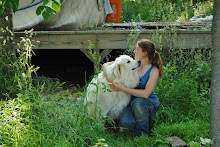
Like every great epic, we begin in medias res:
I'm in Hong Kong!
And I'm married!
We'll catch up on the details some other day. For now, I'm on epicurean holiday.
I read in a cookbook recently an old joke that the Cantonese will eat anything with four legs except a chair. Based on my admittedly limited sample set, this seems like a conservative assesment. For starters, Cantonese cuisine incorporates a good many ingredients with greater or fewer legs than the inauspicious number four: goose, duck, pigeon, crab, shrimp, shark fin, abalone, squid, sea cucumber, jellyfish, and sea urchin, to name a few. Then there is the abundance of leg-less Chinese fruits and vegetables: delicate bok choi no bigger than my thumb, tender Chinese broccoli, hulking daikon radish, crunchy pea shoots, pomelos, lychee, and apple-pears.
These, of course, are the more "normal" ingredients (albeit with some celebration food thrown in for good measure). For the more adventurous palette, signs in mainland China advertise rabbit, snake, turtle, and, yes, cat. They eat things in China that the writers of Leviticus never even thought to prohibit.
My own religious beleifs say nothing about food other than warnings against gluttony--too late! As such, I've cut quite a few notches in my gastronomical belt. Happily, the gourmands of Hong Kong don't venture down the pet food path.
Most of our communal meals have been banquets hosted by Andrew's relatives. I've married into a family of gourmets, so dinners have been, without exception, scrumptious, expertly prepared, and extremely filling. We've been walking as much as possible as a counterbalance to the crispy skin chickens and succulent suckling pigs. But on Friday Andrew and I found ourselves simultaneously unscheduled and hungry, and so decided to have an adventure.
We settled on dim sum, bite size Chinese delicacies that are served a bit like Spanish tapas. Out of curiosity more than anything else, we checked the Michelin guide to Hong Kong for their recommendation. The guide waxed poetic about a tiny shop in Kowloon, to which they had awarded a prized Michelin star. What's more, this place has to be the cheapest Michelin restaurant on the planet, with plates of dim sum costing less than $1.50 US. Now if there are two things that my husband loves more than me, they are eating good food and not spending money. Normally, these two passions come into painful conflict with one another, leading to long, indecisive super market expeditions or restaurant forays. On Friday, the kitchen god and his wife were clearly on our side.
The catch--because with cheap good food there is always a catch--was that Tim Ho Wan (our destination) only seats about twenty people at a time. As it is also serves haute cuisine at unbelievably reasonable prices, the queue is absurd. We arrived at 2 pm on a weekday and were told (in grouchy Cantonese) that the wait would be one hour. We didn't mind--we went exploring in Kowloon while we waited for our number to come up, weaving our way through the throngs of shoppers stocking up for the Chinese New Year. We were seated immediately upon our return, and we handed over our order slip to the harried hostess.
When I say that Tim Ho Wan can seat twenty, I mean that twenty-one customers would warrant intervention by the fire marshall. We sat elbow to elbow with everyone else, and our little table was soon piled high with bamboo steamer baskets, tea cups, and chopsticks. We began with their baked barbecue pork buns, possibly the most popular item on the menu. Sweet fluffy bun, savory pork filling--I wish we had ordered more. From there we moved on to shrimp dumplings, steamed dumplings chiu chou style (containing a mixture of pork, cilantro, peanuts, shrimp, and chives) steamed beef balls, and a light, aromatic egg cake. We tried the pig tongue with black moss, braised lettuce, fried turnip cake, and a sweet dessert soup with pumpkins and chestnuts. Everything was outstanding, and we left feeling perfectly sated. Total damage? $15 US.
Which means we had lots of cash burnings a hole in my pocket for Sunday's Lunar New Year candy splurge. Hooray!
Saturday, January 29, 2011

Sunday, June 6, 2010


Prosperpina's Return

In Roman mythology, Ceres was the goddess of growing plants and mothering relationships, though she is perhaps most remembered as the mother of the abducted goddess Proserpina. According to the myth, the god of the underworld fell in love with Prosperina, kidnapped her, and made her his queen in the realm of the dead. Ceres, out of grief at the loss of her daughter, immediately stopped the growth of plant life on Earth and the world plunged into its first winter. Jupiter then intervened, persuading Pluto to return Proserpina to her mother, but not before the young goddess had eaten six pomegranate seeds from a tree in the Underworld. Having eaten the food of the dead, she was subsequently required to return to the Pluto for half of every year. In Prosperpina's absence, Ceres allowed the plants to wither and die, and upon Proserpina's return every year, spring came forth out of Ceres' joyful celebration.
I have an inkling of how Ceres must have felt. I can imagine that the annual wait must have seemed interminable, despite Jupiter's promise. Ceres must have worried that Pluto would renege, that Proserpina might decide to stay, that some chore would delay her daughter's return. This is spring for me on the farm: a season of worry even as the earth explodes with life. Until the first distribution, I am forever afraid that something will go terribly wrong and I'll be left standing by a barren, blighted field. Every little mishap leaves me questioning my skill as a grower--why are the peas still so short? Will the cauliflower recover from the frost? My spinach is growing too fast--what if it bolts before the rest of the crops are ready for distribtion? I'm a mess, constantly swinging from joy in the spring to despair that I will ever reach June.
On Friday, however, we had our first distribution. My spinach was huge, but delicious. The Turnips were sweet (and almost softball-size thanks to our strange, warm weather). We had bok choy and head lettuce and radishes and pea shoots. I was content. Prosperpina has returned to the world and life can go on.
Wednesday, May 19, 2010
The Best Man is a Horse
Well. It has been a busy spring. Standing on the site of the greenhouse at the beginning of April, I felt a little bit crazy. What kind of mad hubris would make me believe that I could do so much in so little time: build a greenhouse, assist with a massive home renovation, build a CSA from the ground up, and nurse my little plantlings up from the frozen ground? Perhaps if we'd planted potatoes a little bit sooner I would have known that everything would be alright.
 Brendan and Katia have always grown a lot of potatoes. They store well, they sell well, and Brendan could eat them just about every day, so potatoes have become the default field crop of choice at Misty Brook Farm. Whereas my field plan called for 50 feet of turnips or 200 of peas, I had purchased enough seed potatoes to plant almost a quarter acre. Planting so many taters by hand would take an eternity, but because Brendan and Katia are the proud owners of an ancient (but operational!) potato planter, I decided to continue the trend. Jason had gotten the little Ford tractor that pulls the planter up and running last week, so we made plans to plant the potatoes on Saturday.
 “Potato planting is a family activity,” Katia informed us as we began. Three-year-old Alister hunkered down in crib atop the planter, Katia took the wheel, and Brendan sat at attention on the back, loading the planter with potatoes as Katia drove down the bed. Andrew and I sat in the shade, cutting the seed potatoes into smaller chunks—any decently sized piece with an eye will produce a plant and an abundance of new tubers. It all seemed very festive (not to mention fast), and I made a mental note to start scanning the agricultural classifieds for any more potato planters that might come up for sale.
Then, two rows into it, having planted perhaps 25 pounds of the 300 we had, the tire blew out. And the rim snapped. The tractor limped to the edge of the field and died. All of the other tractors were too large to sub in for the job, and I mentally prepared for the Herculean task of planting the potatoes by hand: measuring beds, digging trenches, planting 275 pounds of potatoes. Katia, thankfully, had other ideas. “I could go put the gluesticks on the forecart...” she began. I tried to imagine how gluesticks might help the situation, and what role a forecart would play in that solution. Then I remembered: the horses. Best Man and Tina, Katia's working Morgans, are trained to pull a forecart and help with raking hay. Up to this point, they had been background creatures in the blur of my spring. I didn't have to feed them, and with hay-making not yet begun I had yet to see them in action.
 I rode with Katia back to the house to fetch the trusty steads. The equipage of horse-powered farming is to tractor implements as trains are to cars—there is something indescribably classy in the buckles and leather and bridles and bits. The muscles in their flanks flex as they shift their weight from foot to foot; they smell of horse-hair and pasture rather than diesel fuel. I stood by, admiring them and wishing that I knew anything about horses, though alas I do not.
Katia drove the horses up to the farm and we finished the job. There was a great deal of stopping and starting—the horses went too fast for me to keep the potato planter loaded, so I was forever calling them to a halt, restocking, and then taking off for another ten bumpy feet. Best Man found the whole process frustratingly slow, but he did his best to adhere to the program. In the end, the potatoes got planted. They took up more space than I had planned, but I had no complaints.
This has been my season: harried, crazy, full of problems and equally full of make-shift, last minute, utterly wonderful solutions. I'm learning. The plants are growing. And now I need to weed...
Tuesday, April 27, 2010
Vegetable Musical Chairs
I'm a planner and a list-maker by nature, one of those compulsive types who sometimes writes down tasks after having completed them, simply for the pleasure of checking them off as done. So you can imagine what the lead-up to this year was like for me: umpteen spreadsheets and to-do lists and timetables and budgets, to the point where my computer ran slow from so many open windows. They are my security blankets, the lists, helping me to keep breathing when too many thoughts crowd my head.
But lists are only as good as the circumstances they organize. My seeding plan, for example, was predicated on the assumption that we would have built our greenhouse in March, and it would be ready and warmly waiting for the seeding bonanza of April. That's not exactly how it worked out. Construction was postponed seemingly indefinitely—first because Brendan and Katia, through no fault of their own,were delayed in closing on their house (and the site of the would-be greenhouse). Then there was the problem of the frame, which we had planned to purchase from some friends who backed out the last week in March. We found a greenhouse company that promised to deliver on Saturday the 3rd, until they realized that we were in Hardwick Massachusetts, not Hardwick Vermont. April 1 found me without a greenhouse or a place to put it, watering my ever growing number of trays in a shower.
Change of plans. I drove to New Ha mpshire, loaded up the truck with greenhouse parts, and decided to make it happen. The first step, the foundation, proved the hardest part. Based on our admittedly limited sample set, I'd put the probability of sending a three-foot post into Massachusetts soil and not hitting rock at about 3 to 12. These are neither good betting nor good construction odds. We pried out rocks; we dug holes, and after two days of sweat and tears, we had twelve posts to show for our labor. Erecting the bows and attaching the purlins and ridgepoles seemed like nothing after the first Herculean task, and with Brendan's help we soon built endwalls. We stretched the plastic over the frame and admired our handiwork.
Next we needed heat. An electrician lent us a propane heater, which we rigged up to provide warmth at night. The 200,000 BTU heater proved massive overkill, however, so I slept in a tent next to the greenhouse to monitor for melt down, and we left one roll-up side slightly raised to avoid cooking the plants. All seemed well—my plants were shooting up and my greenhouse finally felt like a proper structure. Until the heater ran out of propane Thursday night. One week's supply had cost $85, so we knew that our jury-rigged system needed changing. Besides, I didn't relish the thought of driving an hour and a half to the propane dealers each week with a 100 gallon tank in the back of the truck.
We called the propane company and asked them to come connect a small heater we had purchased, which promised to be energy efficient, thermostat controlled, and infinitely safer than our first model. But a solution so neat would have ruined our record of near catastrophe, so the good beurocrats of Massachusetts intervened. They've banned the use of vent-free heaters (what we had) as a primary source of heat, and the propane comany's alternative system would run a cool $1200, not including propane. So, without going into too much incriminating detail, I'm headed to Connecticut on Monday in search of “alternative” options.
 In the meantime, I'm playing vegetable musical chairs again, carrying sixteen flats of cold-sensitive peppers inside to warmth at night and out to sun by day. I'm constantly commuting between fields and the greenhouse (they are separated by approximately four miles of windy country road) to water plants or work the land where they will ultimately grow. I'm seeding. I'm digging pathways. I'm trying to make sense of all those best-laid plans amidst the hustle of spring.
But Sunday morning, having worked a seventeen hour day the preceding day (which was my birthday), I decided to stop. We went out for ice cream. I ate food while seated. I went for a walk and admired the fresh green that comes and goes so briefly each year. Then this evening I sat down to make my list for the coming week.
Sunday, April 11, 2010
The View from Tuesday
Some days (like Monday), chores expand. Milking turns into bottling, collecting eggs turns into cleaning eggs, the walk behind rototiller keeps dying, and watering the animals turns into castrating piglets. Before you know it, 4 AM has turned into noon, and all hands are on deck to finish the chores so that we can finally go home for a proper meal. Days like Monday have their purpose, though, outside of the sheer necessity of them from a maintenance perspective. They make Tuesdays feel wide and gloriously open when, at 6:30, you stop to watch the piglets head butting one another and snuffing around in the sawdust (apparently the previous mornings emasculation was not nearly the trauma that their squeals suggested). Chores are finished; you are free to return to the sleepily quiet house where, through the window, you can see the dew drops on the grass refracting the sunrise as one thousand points of light.
Friday, April 9, 2010
How Badly Do You Want It?
My eyes are bigger than my garden. I think I can attribute this overambitiousness to Eliot Coleman's books Winter Harvest Handbook and the classic New Organic Grower. Eliot Coleman, whose brilliant designs and incredibly efficient systems yield fresh greenery all winter long (in Maine!) can be both inspiring and depressing when you are in my position.
As a farmer striking out on her own this year, I'm building everything from the ground up. I've got visions for implementing and improving on all of the good systems of Caretaker and Serenbe, but right now, I'm about as far from the fine-tuning stage as you can be. I'm still charging forward at full throttle, seeding flats even as I mentally scramble deciding where they will go. I'm watering plants in a shower with a showerhead, toting them back and forth from the bathroom as the sun or the woodstove dries them out. My planting “apprentice” is a three-year-old, whose primary task is to warn me if his one-year-old brother breeches my ottoman blockade and charges my growlights. A friend in Athol is babysitting eight flats of onions and two lettuce trays; as soon as I had sent them off, I seeded beets, cauliflower, peppers, parsley, and chives. My lights are full again.
Meanwhile, my greenhouse is in pieces, finally here, but still far from built. After a shipping snafu delayed what was supposed to be a Saturday delivery, I took matters into my own hands and drove to central New Hampshire to pick it up. For the record, a 17 x 20 foot greenhouse does fit in the bed of a Toyota Tundra—just not very gracefully.
Up at the farm, the rye grass that blanketed my field all winter is beginning to take off: thickening, greening, growing taller every day since the rains let off on Wednesday. I, meanwhile, am itching to till. Rye grass residue naturally impedes seed germination, which is great as a weed suppressant, but not so good when you need to start direct seeding soon. There are strawberries that need to be transplanted, equipment orders still to call in.
Three days a week, as part of our arrangement with Brendan and Katia, I take the 4 AM chore shift: feeding calves, shoveling manure, and watering pigs while someone else milks. Andrew takes three other mornings and all of the afternoons. We're all various states of crazy transition: from winter to spring, from Williamstown to Barre, from a small, cramped house to a new, dilapidated home that would intimidate even the folks of Extreme Home Makeover. Through all of this, we're learning to live together, to respect boundaries, to find time and space for rest.
And it is April. Let the games begin.
Subscribe to:
Posts (Atom)
