Monday, February 16, 2009

Brain Food

As I have noted, if someone were to make a top five list of Paisa weekend activities it would probably look something like this:

5. Eat really delicious food
4. Spend time with friends
3. Visit with family
2. Chill at a finca
1. Party at your finca, with your family and friends, celebrating someone's birthday with lots of meat.

Guess what I got to do last weekend?

Alina's good friend Nati was celebrating her 25th birthday, and I was invited to join in the festivites at Nati's aunt's finca, about 30 minute outside of Medellin. After a great deal of vehicular logistics and last minute food shopping, we drove out of the warm, rainy Medellin night and into the mountains, finlly turning off of the autopista onto a dirt road that in turn deposited us at the threshold of Nati's finca.

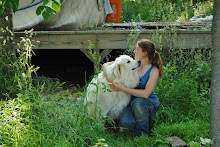
Immediately, various male members of the party began clustering around the makeshift barbecue grill, blowing on the coals, and offering advice. Nati set to work reassembling the stereo and selecting appropriately festive music. (By morning, the neighbors had all been serenaded by a mix of the best of the 90's and Colombian Cumba.) The devastatingly seductive aroma of chorizo and toasting arepas slowly overshadowed the scents of the campo so that we all began eyeing the grill hungrily and hefting our forks. Candela, the neighbor's curious puppy, waited patiently beside the coals in the vain hope that something dreadful would call us all away and provide her with a window in which to feast. As we passed the bowls of steaming, cripy chorizo from person to person (there were not plates enought for everyone), a mug of mate--a caffeinated herb beverage--passed behind. I was more than content.

The food for these asadas (barbecues) is appropriately simple: arepas, chorizo, some cuts of beef, some butter, salt, and lemon juice. Upon my return to Medellin, I was savoring a different, though surprisingly apropo sort of culinary delight, my new book Feast by Martin Jones. Feast traces the uniquely human tradition of sharing food from Homo heidelbergiensis to the present day and disects the way that food sharing has shaped human culture just as human culture has shaped the experiene of sharing food. Only in humans, Jones relates, do groups not only hunt together but also share the fruits of their labor with extended groups of family and friends. Within the other branches of the animal kingdom, eating is a speedy event and the presense of other creatures is usually a challenge or a threat. But we humans not only tolerate the presense of others of our species at the table, we invite it. We build elaborate rituals around the sharing of a meal, tell stories, sing songs, pray, linger as the night grows deeper.

Shortly after returning from the finca, I happened to be reading about Neanderthals and how the development of stable family groups with hearthfires helped us grow a brain (and with it a real food culture). Food cooked with heat not only tastes sweeter and is more aromatic (a result of a chemical reaction that produces "Amadori products"), it is also easier to digest, as the fire has already broken down many complicated molecular chains into smaller pieces. Fermentation does much the same thing, coincidentally. Cooking with heat renders many toxic raw foods (of both plants and animals) suddenly nutritious, which allowed the human diet to expand and diversify. As humans no longer needed the endlessly regenerating teeth of a shark nor the four stomachs of a cow, we could care for the very old and very young (both of whom need soft, easily digested food) and use that extra caloric energy to grow a bigger brains. Our digestive equipment got smaller even as our brains got bigger. And what did we need that bigger brain for? The neocortex is a part of the mamal brain the size of which corelates with familiar group size and complexity of social interaction. We humans have a neocortex the size of which suggests a "friend" group of 150-200 people (think of your average Christmas card list). This larger group size was necessitated by the demand for greater social cohesion the better to survive in a swiftly changing world.

Which brings us back to the finca, where I sat happily munching away on arepas and chorizo and working hard to grow a bigger brain. I am a product and a producer of the same food culture that has existed for more than 40,000 years. It's manifestations are many and varied, but pretty much all (I'm convinced) are worth sampling.

Wednesday, February 11, 2009

Grocery Story Shopping


Check out Civil Eats (an awesome website in its own right) for a guest post by yours truly). I'm off to the grocery to conduct further "research". Yum.

Sunday, February 8, 2009

Nobody Puts Baby in the Corner

I'm normally the kind of person who researches a trip semi-obsessively before my departure. By the time I boarded to the plane for my semester of "study" in New Zealand, for example, I had highlighted my Let's Go Travel Guide and already begun planning what food to pack for the hike to Milford Sound. For this Colombia expedition I decided to cultivate a bit more spontaneity, and about the only preparatory action that I took was to watch Dirty Dancing 2: Havanna Nights for salsa tips. The dancing was pretty cool, but the cheesiness was predictably quite high.

Havanna Nights must have had a subliminal effect on me, however, as once I arrived in Medellin, I set to work looking for a dance school. With Luz Helena's help, I found one--El Ultimo Cafe--not too far from my language university, and I was soon signed up for private lessons in any and all forms of latin dance. My teacher promised me 18 hours of class at a ridiculously low price, and I figured that with my gringa background, I needed all of the hours of practice that I could afford.

I began with salsa, which everyone had told me was one of the easiest dances. That may be true for Latin people, born with hips that move in perfect rhythm without either thought or effort, but my WASPy genes did not endow me with such gifts. I could do the basic steps, but the feel of the dance was totally lost on me. I tried not to lose hope, and when my teacher informed me that there would be a milonga Saturday night at my school, I decided to watch in hopes that I might learn grace by osmosis. A milonga, I learned, is a sort of tango salon, a place where couples can dance but where, during breaks in the dancing, professional dancers or singers give brief performances. I sat (happily) in the corner and watched the intricate footwork and graceful movements of the couples. Forget salsa, I thought to myself, I want to tango!

I had my first lesson the following Monday and--much to my surprise--I was actually kind of decent (at least for a total newbie gringa). The steps which had seemed incomprehensible and totally improvised, began to make sense to me. The underlying beat pulsed behind the accordion and piano flourishes and guided me around the dancefloor on tiptoes. I began to recognize the subtle shifts in pressure and footwork that my teacher used to direct me: sometimes holding back and hesitating, sometimes matching our paces to the sweet, tripping notes. I became so enraptured with this dance that I stopped feeling self-conscious, stopped trying to watch my feet or catch my reflection in the mirror. The discovered that the romance of tango can be bold and red: women in tight dresses with a rose between their teeth. Or it can be simple and timeless: the happy feeling of moving in well-paired synchronicity with another person. Unlike Dirty Dancing's Baby, I'm not in love with my teacher, but I am in love with the dance.

Monday, February 2, 2009

Gastronomic Synchretism

A "finca" according to my college Spanish, is a farm. So you can imagine my excitement, shortly after arriving in Medellin, to discover that most Paisas like nothing better than to spend a weekend chilling at their family`s finca. Wow, I thought, this is farming county! Well, not exactly. As it turns out, "finca" translates more accurately as "country house" ("granjas" are the places that produce the food), a point which I was speedily apprised of when I started talking about helping with the weeding.

So when Luz Helena (my host mother here in Colombia) invited me to her finca last weekend, I abandoned my dreams of hard labor and contented myself with long walks, slow meals, and a warm fire at night. Medellin, though high enough in the mountains that the climate belies its equatorial location, is still a fairly warm place. The midday temperature is usually around 80° and the nightime low doesn`t go below 60°. Going out to a finca entails a climb higher up into the mountains to cooler weather, and justifies a fire in the fireplace.

Luz Helena`s finca could have been plucked from the happy ending of a fairy tale: it was surrounded by beds of explosively colorful flowers, and a tiny brook cut through the lawn before disappearing into the trees. Daniel, Luz Helena`s 8-year-old grand nephew, volunteered himself as tour guide for Alina and me, and we armed ourselves with umbrellas before venturing into what was surely a dragon-filled forest. Admittedly, the nearest thing to a dragon that we encountered that weekend was a small black chiauaua (Daniel nicknamed him "Rocky"), who followed us through a gauava forest. There, in the shade of the pygmy guava trees, Alina and I ate our fill while Daniel played tug-of-war with Rocky.

The next morning, Luz Helena took us to a local market to give me a lesson in Colombian fruit words. Among the bitayas, guayavas, mangos, bananas, tomatos de arboles and other new foods, I encountered a familiar (though utterly unexpected) sight. Rhubarb. February is the perfect time for rhubarb if you live in England or the southern United States, but I was more than a bit taken aback to find that it grows in Colombia`s temperate climate. Rhubarb in endemic to Siberia, so this plant was as out of place as a mango tree in Antarctica. But that didn`t stop us from buying a few stalks (they were, after all, local) and the following week Alina and I made a pastel de rubarb (as Luz Helena called it) that combined Colombian moras (rather like blackberries) with our exotic interloper. We made our version Alina-friendly by using gluten-free flour, but the original recipe calls for the normal white stuff, which would probably yield a slightly more durable crust. In our case, the pastel looked stunning in the baking dish, but became a rather messy cobbler as soon as we tried to serve it. Hopefully, I will be able to upload some pictures shortly (which will, I think, induce any skeptics to give this recipe a try).

Pastel de Rubarb y Moras

Crust
1 1/2 cups all purpose flour
3 tablespoons sugar
1/4 teaspoon salt
1/2 cup (1 stick) chilled unsalted butter, cut into 1/2-inch cubes
1 large egg yolk
3 to 4 tablespoons chilled cream
Streusel
9 tablespoons unsalted butter, cut into 1/2-inch cubes
3/4 cup sliced almonds
3/4 cup (packed) golden brown sugar
1 teaspoon ground cinnamon
3/4 cup all purpose flour
Filling
2 1/2 cups 1/2-inch-thick slices rhubarb
2 1/2 cups moras (raspberries or blackberries would be a good substitute, I think)
1 1/4 cups sugar
1/2 cup all purpose flour
1 T lemon juice


For crust:
Blend flour, sugar, and salt in processor 5 seconds. Using on/off turns, cut in butter until coarse meal forms. Add egg yolk and blend. Add cream if necessary (we didn`t need it). Blend until moist clumps form. Gather dough into ball. Press dough into the bottom of a 9x9 inch Pyrex baking dish. Pierce crust all over with fork. Chill at least 2 hours. Bake cold crust until golden brown, pressing with back of fork if crust bubbles, about 20 minutes. Remove from oven. Reduce oven temperature to 350°F.

For streusel:
Cook butter in large skillet over medium heat until golden, stirring often, about 5 minutes. Remove from heat. Mix in almonds, sugar, and cinnamon. Add flour and stir until moist clumps form. Cool completely. (Crust and streusel can be made 1 day ahead. Cover separately and chill.) If you chill the streusel, it will probably be necessary to break it up with a fork when you prepare to use it.

For filling:
Preheat oven to 375°F. Toss all ingredients in bowl to blend. Let stand until filling looks moist, stirring occasionally, about 15 minutes. Spoon filling into warm crust. Crumble streusel over. Bake until filling is bubbling and streusel is crisp and brown, about 1 hour. Cool tart on rack 30 minutes. Serve warm or at room temperature.

Thursday, January 29, 2009

Eat, Speak, Love

Allow me a brief linguistic digression, if you will.
In my heretofore monolinguisity, I´ve always felt like a stereotypical American (and in a bad way). True, I´ve done my fair share of traveling, but always with handy phrase " do you speak English?" in the local idiom. Among other things, my Colombian adventure is an attempt to correct this shortcoming and finally achieve something akin to proficiency in a language other than Pig Latin. It has been hard for me to listen, and listen, and still not understand. I find myself frustrated by the inadequacy of my Spanish vocabulary to express my English thoughts. Pero, me encanta español. I like this language so much that I feel like Elizabeth Gilbert in Eat, Pray, Love--inclined to read my Spanish-to-English dictionary for the sheer joy of new words.
Medellin is an especially ideal place to learn Spanish, I believe, because of the similar enthusiasm that paisas seem to feel for their slang-laced paisa speak. Not a day goes by without my professor slipping some new morsal of paisa into our lesson, all of which I collect and chronicle and strive to incorporate in my speech. A disproportionately large amount of my paisa seems to have been spawned in Medellin´s shady narcotrafficking past, but I still love the words. "Be careful that you don´t dar papaya (literally, to give a papaya) walking around at night"; in other words, don´t unnecessarily expose yourself to danger. When you go out on the weekends you´ll most likely be found "levantamiento de codo" (raising your elbow--aka taking a drink). And I´ve been informed on more than one occasion that "el mundo es un pañuelo" (the world is a handkerchief) to explain why I keep running into people I know in the must unexpected places. Amusingly, everyone has a different explanation for this phrase.
But studying Spanish has afforded me more than just an opportunity to expand my vocabulary and send excited emails about cognates (whoa! "crepusculo" means twilight, and hey, in English, when you descibe something as "crepuscular" it means you do it in the evening. SOOO COOL!). My studies, brief as they are, have given me a whole new perspective on how we use words to communicate. I´ve noticed how certain words are a sort of key to a conversation, without which all the rest might as well be nonsense. The chasm of difference between signifier (the word) and signified (the thing, tangible or abstract, that the word references) has never been more apparent to me. Words on their own mean nothing; they are as ambiguous as the letters that form them. In many ways, words are social creatures, and as a student of Spanish I am learning their social norms. Ocassionally I´ll stop in mid-sentence and suddenly exclaim "I said that idea correctly without having to think about it!". My listeners are usually kind enough to congratulate me on my small victories.
At the same time, I am engaged in a process of meta-learning--thinking about thinking, learning about how I learn. This morning, I met with my conversation partner, Andrea, and we read to one another from children´s books to practice our accents. Towards the end of my story (about a frog with too-tight pants and a fondness for beer), I suddenly realized that the whole thing was written in rhyming verse. In my halting Spanish I had understood the story but missed the sense. Andrea turned back to the beginning and read a few verses for me so that I could hear the rhythm of the words. That´s what I´m looking for, really. Rhythms of speach, patterns in my mistakes as well as in verb conjugations. Details are important when learning a new language, absolutely. But just as salsa is more than just a series of steps, Spanish is an integrated amalgam of rhythm and patterns. I think I´m starting to feel the beat.

Monday, January 26, 2009

I´ll Have What She´s Having

I can pinpoint the moment when I relinquished any residual vestiges of picky eater-ness. I was in Turkey, traveling with four other girls, and we were dining at the home of family friends. I can´t remember most of the details of that feast (other than the fact that it was all indescribably delicious), but I do distinctly recall that one course featured whole artichoke hearts. I had spent the previous 18 years declining all things artichoke for no better reason than that they looked weird, but my desire to be a good guest overrode the force of my habit. I took one bite and I swooned from gastronomic delight. And I thought to myself, “My god! What other glories of the table have I been neglecting out of ignorance or fear?”

Ever since, I have made a point of trying any and all local delights, no matter how unusual. In Chinatown, I slurped my way through chicken foot soup, in London I tried jellied eels (actually not one of my most successful gastronomic adventures, but a good story nevertheless). Now that I’m in Colombia and happily ensconced with a host mother, I’m wolfing down Colombia´s “comida tipica” with daily delight.

I knew that I would love Luz Elena, my host mom, when her first order of business upon my arrival was to take me grocery shopping. We filled a grocery cart with fruits, vegetables, and the trappings of the illusive Saturday “Bandeja Paisa” (the Colombian version of Sunday dinner), and as we left the store she bought me a cup of freshly squeezed sugarcane juice. The sugarcane juice sealed the deal; I would go to war for this woman.

Ever since my arrival in Colombia, people have been bringing up bandeja paisa repeatedly and asking me if I have yet experienced the magic. It really doesn´t take much to get my hyped up at the thought of food, so by the time Saturday rolled around my anticipation had reached a fever pitch. After attending mass, Luz Elena and I made our way to the home of her 93-year-old mother, where I expected to eat prodigious quantities in the relatively calm company of a few close family members. Instead, upon my arrival, I discovered that I had stumbled into an unofficial, unexpected extended family reunion for Luz Elena´s cousins, nieces, nephews, children, and friends. Everything before had been merely an introduction, THIS was a Spanish immersion experience. I did my best to answer questions about my journey and my hometown, and what I liked best about Medellin. I received unreasonably generous compliments about my Spanish (the fact that I frequently had to ask for them to be repeated, but slower, ought to give an idea of my hosts´over-kindness). Eventually, we migrated to the tables, and the feast began.

We began with a simple bean soup, sopa de frijoles, which I laced with avocadoes. We followed the soup with rice, salsa, carnida molida (cooked beef that has been finely shredded), chorizo sausage, fried plantains (both the sweet, mature ones that cook down like bananas foster and the immature green ones that fry up like potato chips), chichorones (heavenly bits of fried pork skin that melt in your mouth with a entirely misleading suggestion of airy lightness), and of course the ever present arepa, Colombian corn cakes. All the while Spanish was flying thick and fast—jokes cracked, stories related, congratulations and condolences offered all around. I was content to be a quiet member of this gathering, the adopted gringa for the afternoon whom everyone silently welcomed even as they talked past her at 500 words per second. After dinner someone brought out a tub of ariquipe, a caramel dessert made according to the family recipe. I found myself eating the ariquipe with the same helpless craving with which I attack peanut butter. Eventually you give in and start eating it by the spoonful rather than the serving. Colombians, I have learned, generally eat the largest meal of the day for lunch, and after Saturday I could see why. I needed the better part of the day (spent wandering the grounds at a gorgeous country house, to be chronicled shortly) simply to digest my meal.

Now, I have not yet made any of this myself. But I purchased a bag of arepa flour tonight and I am working up the courage to reenter the kitchen after the disastrous experience of my wild yeast bread. So, “good Lord willing and the creek don´t rise” (as we say in Georgia), I will soon be bringing the secrets of Bandeja Paisa to any other good eaters out there who also travel with minds and mouths open.

Monday, January 19, 2009

The Accidental Farmers Of Medellin

More so than at any other time, when I travel I begin to employ all of my senses, rather than relying on sight alone. The odor of exhaust intertwines with the warm, golden aroma of unfamiliar pastries and the steamy smell of pavement after a rain. I run my hands along carved marble facades or feel the uneven pitch of Bogota´s cobbled streets. under my feet . I revel in the rich, creamy texture of carimoya (to look at, uglier than celeriac, but to eat, reminiscent of a sweeter, fruity avocado) and take delight in the fact that, instead of the canned melodies of an ice cream truck, here in Medellin I am serenaded by a banana salesman with a PA system. At night, I fall asleep listening to the periodic whistle of the night watchman. (Apparently armed only with a whistle and a stick, he wanders the neighborhood from dusk til dawn whistling every so often to scare off malcontents. This one man "security force" is endearingly reminiscent of bear deterrent strategies for the woods like saying "go away bear!" in as deep a voice as possible.)

I travel for a variety of reasons, not the least of which is the wake-up call to life that accompanies this sensory barrage. It can be exhausting sorting through and make sense of the accents, the vocabulary, the utterly unfamiliar ways of doing the most mundane tasks. But when I happen to look down and notice that paisas (the people of Medellin) are using peanut plants, with their clover-like leaves and petite yellow flowers, as a lawn cover, I can`t help but grin, and wonder what other familiar sights and sensations are hidden amidst the exotic ordinariness of Medellin.